
Inventory starts with an item you can identify
The barcode is the shortcut. A clean product record is what makes the shortcut reliable. Before importing a large catalog, prove a small set of products from receiving through sale and return.
Give every sellable choice a stable identity
A product name alone may not distinguish a blue shirt in medium from the same shirt in large. Decide which variations need their own stock record and keep the SKU and barcode consistent across your import, shelf labels and supplier records. Preserve leading zeros by treating identifiers as text. Inspect duplicate codes before importing; a fast scan is not helpful if it selects the wrong size.
Build a sample containing your most common item, two similar variants, a discounted item and an awkward label. Check the price, tax category, unit of sale, cost basis and starting quantity for each. If a field is missing or uncertain, resolve its meaning before you populate the entire catalog. Copying unclear values into thousands of rows only makes the correction larger.
Check purchase cost and selling price as different fields. A supplier price for a box of twelve should not accidentally become the unit cost of one item. Keep the original supplier reference alongside your internal identifier where your import allows it, and document the conversion used. Ask someone who did not prepare the spreadsheet to review the sample; familiar product names can make a misplaced column surprisingly easy to overlook.
Prove the stock arithmetic
Start with an illustrative ten units. Receive five, sell two, return one to sellable stock and record one damaged unit. The expected ending quantity is thirteen. Repeat the same story in the trial and explain every movement. If there are multiple locations, repeat a transfer and check both sides; do not count the same in-transit stock as available at both stores.
- Separate a corrected count from a customer return so the history has a useful reason.
- Use a physical count to establish starting stock; old software quantities can carry old mistakes.
- Check permission boundaries for changing prices, costs and stock quantities.
Weighted goods need their own test
A label that encodes a weight or price is different from a simple item barcode. Bring real labels and the scale documentation to a compatibility check. Confirm units, decimal positions, product mapping and tare behavior. VoVi publishes specific weighing guidance, but a software feature does not certify a physical scale. Ask the supplier to verify the exact instrument and connection; do not apply a piece-count demonstration to weighed goods.
Use reports to ask a better question
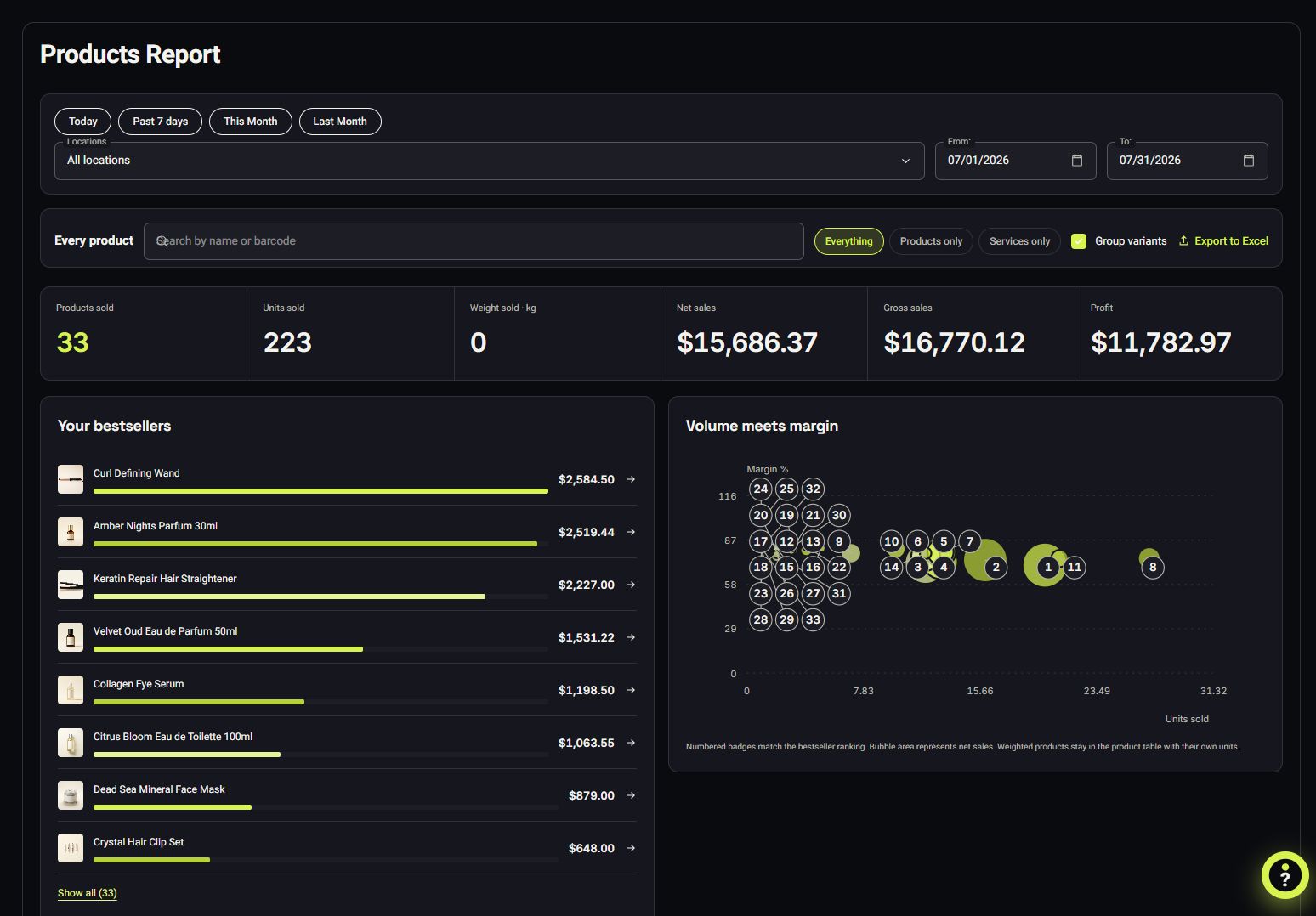
After the sample transactions, inspect units sold, returns and ending stock together. A popular item with poor margin asks a different question from a slow seller with excess stock. Validate the underlying costs before treating a displayed profit figure as a business conclusion. Keep the inventory test separate from promises about increased sales or reduced losses: the purpose is to establish trustworthy records your team can explain.
Sources & verification
Provider details can change. Confirm your written quote and local requirements before signing.